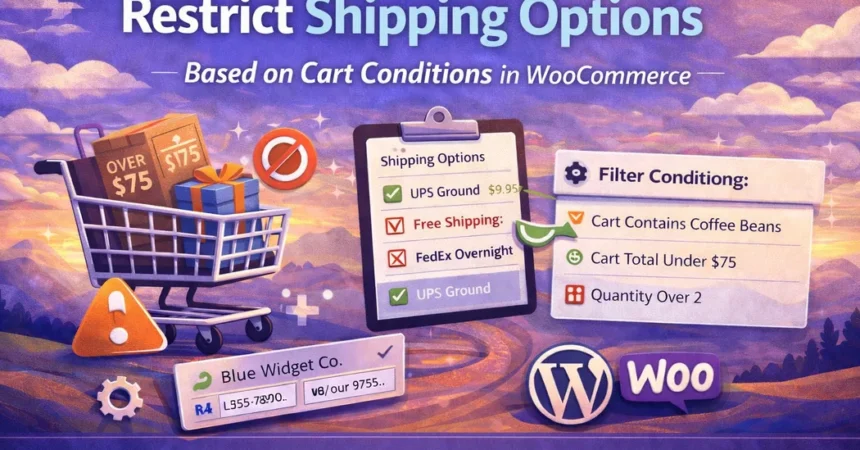
Shipping is one of those checkout elements that quietly affects everything. Conversion rates, customer trust, and order size. When shipping options feel confusing or irrelevant, people hesitate. They stop and think too much. That pause is usually where carts get abandoned, which is why many store owners look for ways to hide shipping methods that do not apply to the order.
Many store owners never realize that WooCommerce, by default, shows every available shipping method even when it does not make sense for the order. A lightweight product still shows freight. A high-value order still shows free shipping. Digital items sometimes trigger shipping altogether. It looks careless even when the store itself is not.
This is where learning how to hide shipping methods for WooCommerce based on cart conditions becomes important. You are not removing functionality. You are shaping logic so customers only see what applies to them.
Why Conditional Shipping Visibility Matters More Than You Think

Customers rarely understand shipping rules. They only see the result. When they see too many options, they assume complexity. When they see irrelevant ones, they lose confidence, which is why store owners often choose to hide shipping methods that do not match the cart.
A store selling fragile items may want to hide local pickup for large orders. A wholesale store may want to hide free shipping unless a minimum quantity is reached. These are not advanced use cases. They are practical and common.
Using a proper WooCommerce hide shipping method setup lets the store behave intelligently. The checkout feels intentional instead of automated. That difference is subtle but noticeable.
There is also a support angle here. Fewer shipping options means fewer emails asking why a certain method was available. Clarity removes friction on both sides.
What Cart Conditions Actually Mean in Practice
Cart conditions are simply rules based on what is inside the cart. This can include cart total quantity, product category weight, shipping class, or even specific products.
For example, you may want to hide express shipping if the cart contains oversized items. Or hide cash on delivery shipping when the order value exceeds a certain amount. These conditions are based on logic that WooCommerce already understands. You just need a way to apply it visually.
This is where plugins designed to hide shipping methods for WooCommerce come into play. They act as a rule engine layered on top of default shipping settings.
How the Plugin Fits Into This Workflow
The Hide shipping methods for WooCommerce plugin is designed to let you apply these conditions without touching code. Instead of modifying functions or child themes, you work through a rules interface.
You choose a shipping method. You choose a condition. Then you define when that method should disappear. That is it.
This approach is cleaner than editing shipping zones repeatedly. Shipping zones define availability. Conditional hiding refines visibility. The two work together, not against each other.
For store owners who are not developers, this is the safest way to control shipping behavior while keeping updates intact.
Common Scenarios Where Conditional Hiding Helps
One of the most common use cases is the minimum order value. You may want to hide free shipping until the cart reaches a certain amount. Showing free shipping early only creates disappointment later.
Another scenario involves product types. If the cart contains digital products, then shipping should not appear at all. Or if it contains a combination of digital and physical items, then only relevant methods should show.
Weight-based conditions also matter. Heavy carts may need to hide flat rate options. Light carts may not need freight. This logic becomes manageable once you start using WooCommerce’s hide shipping method rules intentionally.
Step-by-Step Overview of Setting Up Rules
Once the plugin is installed, you access its settings from the WooCommerce menu. The interface focuses on rules rather than global changes.
You start by selecting the shipping method you want to hide. Then you choose the condition type. This could be the cart total product quantity category or other supported criteria.
After that, you define the comparison. Greater than, less than, or equal to. The rule becomes active immediately once saved.
This setup process feels straightforward because it mirrors how store owners already think. If the cart total is below X, then hide method Y. No translation required.
Managing Multiple Conditions Without Chaos
One concern store owners have is rule conflict. What happens when multiple rules apply? The plugin handles this by evaluating conditions logically.
You can create multiple rules for the same shipping method. Each rule acts independently. If any condition triggers the method is hidden.
This gives flexibility. You can hide the same method for different reasons without stacking logic inside one complex rule. It stays readable later, which matters when you revisit settings months down the line.
This structured approach makes the hide shipping method for WooCommerce setups maintainable rather than fragile.
Testing Your Shipping Rules Properly
After setting rules, testing is critical. Always test as a customer. Add products to the cart that trigger different conditions.
Try edge cases. Orders just below the threshold. Orders just above it. Mixed product types. This ensures your logic behaves as expected.
Caching plugins can sometimes interfere with checkout visibility. If you do not see changes immediately, clear the cache or test in a private browser session.
Testing sounds obvious, but it is often skipped. Shipping issues show up only at checkout, which is the worst place to discover mistakes.
Why This Is Better Than Custom Code
Some developers suggest using hooks to remove shipping methods conditionally. While this works, it introduces risk.
Theme updates can break logic. Code snippets get lost. Debugging becomes harder over time, especially when multiple conditions stack up.
Using a plugin designed for WooCommerce hide shipping method logic keeps everything centralized. You can see all the rules in one place, disable them temporarily, and adjust conditions without rewriting anything.
For store owners managing content, products, and orders already, this simplicity matters.
Performance and Checkout Speed Considerations
Conditional shipping logic does not significantly affect performance when done properly. The plugin evaluates conditions server-side during checkout calculation, which WooCommerce already does.
There is no extra frontend scripting required. Shipping methods simply do not appear when rules apply.
This keeps the checkout experience fast and clean. Customers do not see methods flash and disappear. They only see what is valid for them.
A clean checkout often feels faster, even when the difference is minimal.
When Not to Hide Shipping Methods
It is worth noting that hiding too much can also confuse users. If no shipping options appear, customers may think something is broken.
Always ensure at least one valid method remains visible. If all methods are hidden for certain carts, consider adding messaging explaining why.
For example, shipping is not available for this combination of items. Transparency matters. The goal is clarity, not restriction for its own sake.
Using the hide shipping method for WooCommerce responsibly means balancing logic with communication.
Final Thoughts on Smarter Shipping Control
Shipping rules do not need to be complex to be effective. Small adjustments create a smoother checkout flow. Customers see fewer irrelevant choices. Admins handle fewer questions.
Learning how to apply cart-based conditions lets WooCommerce behave more like a guided experience rather than a generic system.
With the right setup, using the WooCommerce hide shipping methods logic, you are not limiting customers. You are helping them make faster decisions.
And that usually leads to better outcomes quietly and consistently without anyone needing to think about it too much.